
About this service
The German cockroach (Blattella germanica) is a small species, 1–1.5 cm long, light brown, with two dark parallel stripes behind the head. It lives almost exclusively indoors and prefers warm, humid voids: kitchen cabinets, behind fridges and ovens, around dishwashers, and inside sockets and electrical boxes.
In Northern Cyprus it is the cockroach we encounter most often in homes, restaurant and hotel kitchens — and the hardest to control. The female carries her egg case (30–40 eggs) until the eggs hatch, and in warm conditions the egg-to-adult cycle takes only a few weeks. A problem that starts with a few insects can reach hundreds quickly; seeing them in daylight usually signals a heavy infestation.
Supermarket sprays and blanket liquid treatments rarely solve it: their repellent effect drives cockroaches deeper into walls and appliances, and populations build resistance. That is why our German cockroach method is diagnosis first, then targeted treatment and measurable follow-up.
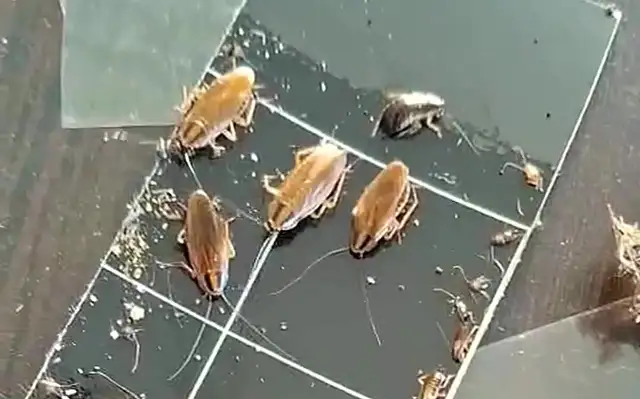
The field video on this page shows monitoring traps and harbourage points from one of our customers' kitchens. The number of adults and nymphs on each trap shows us the intensity and source of the infestation; on follow-up visits we compare the same points and report the result in numbers.
From the field
Treatment process
- Free inspection: locating harbourages in the kitchen, bathroom, behind appliances and in electrical voids
- Diagnosis with monitoring (sticky) traps: adult/nymph ratio to identify intensity and source
- Targeted gel bait in cracks and crevices, with active-ingredient rotation to prevent resistance
- Insect growth regulator (IGR) support to break the egg and nymph cycle
- Hygiene and proofing advice: food sources, water leaks, sealing gaps
- Follow-up visit after 10–14 days: trap count, second treatment if needed and a written report
Free inspection and written quote
Get a written quote for German Cockroach after a free inspection — fees are shared in the quote document only.
Get a Quote